
How to Measure SAR Value: A Quick Guide
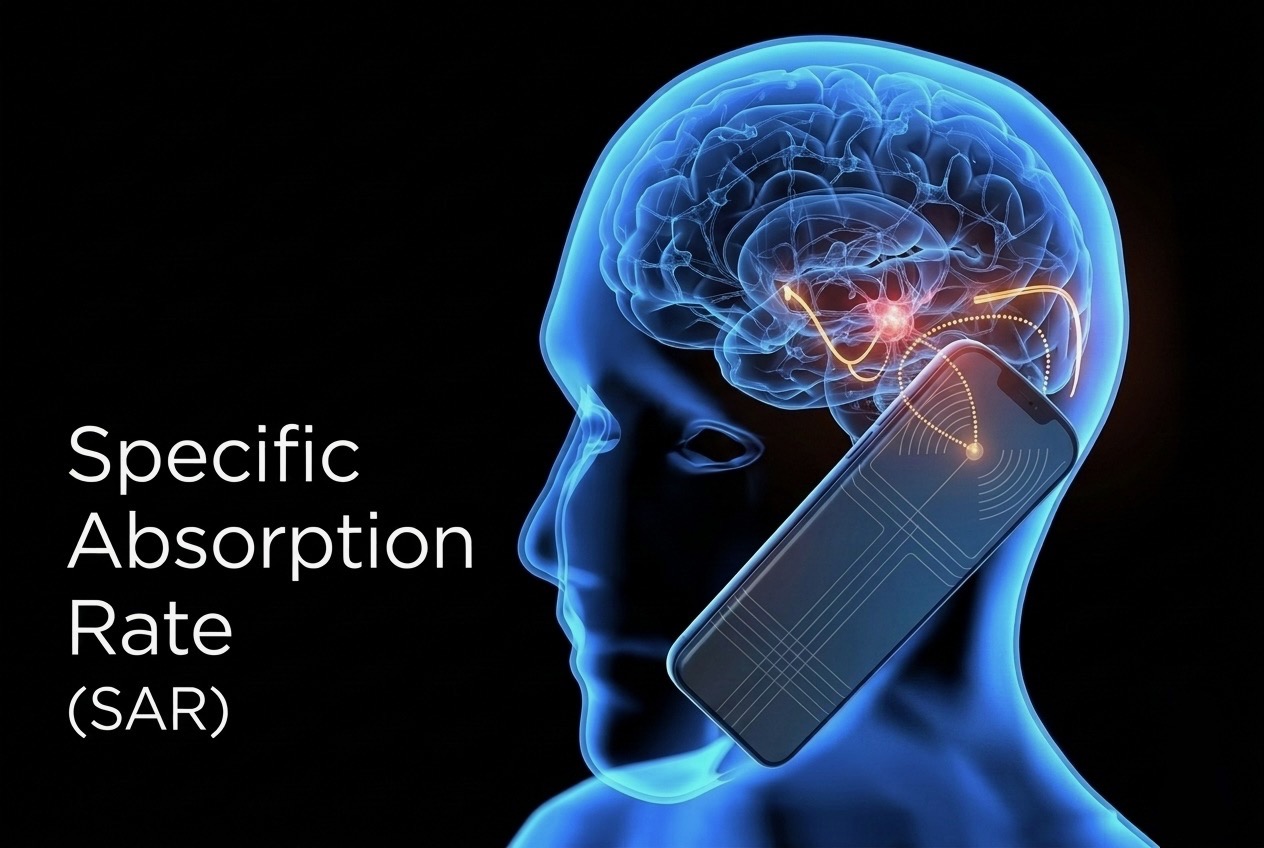
If you’ve ever seen “SAR” listed in a phone’s detailed specs and wondered what it means, you’re not alone. Specific Absorption Rate measures how much radiofrequency energy the body absorbs when using a wireless device. It’s a number manufacturers never get to guess at, since regulators require it measured, not estimated, before a product can reach store shelves. Here’s how that process actually works.
What SAR Is and Why It Can’t Be Calculated on Paper
SAR is expressed in watts per kilogram, reflecting how quickly RF energy is absorbed by tissue relative to that tissue’s mass. Absorption doesn’t stay constant, though. It shifts with frequency, antenna design, transmit power, and how close a device sits to the body in normal use. With that many variables in play, no formula reliably predicts SAR from a spec sheet. It has to be physically measured in a lab, under conditions built to mimic real-world use.
The Rulebook Testing Labs Follow
SAR testing follows methodologies designed to keep results consistent no matter where a device is tested. A few show up again and again:
- IEC 62209-1, covering handset-type devices used against the head
- IEC 62209-2, covering body-worn and wireless devices near the torso or limbs
- IEC/IEEE 62209-1528, the foundational standard for SAR procedures
- FCC KDB publications, offering supplemental guidance for laptops, wearables, and multi-antenna devices
These documents spell out phantom shape and probe calibration, so results stay comparable across labs.
Walking Through an Actual SAR Measurement
Picture a phone sitting inside a lab, about to be tested. Technicians first set up a SAM phantom, a shell shaped like a human head or torso, filled with liquid engineered to mimic the electrical properties of human tissue at the tested frequency. The device is positioned against that phantom in a standardized configuration, such as pressed to the cheek, tilted away, or held at a defined body-worn distance, depending on how the product is meant to be used.
From there, a robotic arm carrying a small electric-field probe sweeps the phantom’s surface in a coarse area scan, hunting for the region where absorption runs highest. A finer zoom scan then pins down that peak more precisely. Readings are converted into SAR values and averaged across a defined tissue mass, 1 gram in the US/Canada or 10 grams in most other regions, producing the number ultimately reported. If the device wasn’t tested at maximum power, engineers extrapolate the results to that worst case.
None of this happens with off-the-shelf tools. A proper SAR lab relies on a robotic scanning system for sub-millimeter precision, calibrated field probes matched to the tested frequency, phantom shells, tissue-simulating liquids, and equipment to keep the device transmitting at a controlled, known power.
The Limits Everyone’s Measuring Against
Once measured, a SAR value gets compared against a legal ceiling that varies by region. The FCC caps SAR at 1.6 W/kg averaged over 1 gram of tissue. Most of the rest of the world, including the EU and Mexico, follows the ICNIRP-aligned limit of 2.0 W/kg averaged over 10 grams; Mexico’s IFT-012-2019 applies that approach to devices between 30 MHz and 6 GHz within 200 mm of the body. Because the limits differ, a device headed for multiple markets often needs separate test campaigns.
Small Changes, Big Swings in the Result
It’s worth noting how sensitive these measurements can be. Moving an antenna a few millimeters, thickening a case wall, or adjusting duty cycle can shift a measured value enough to require retesting, and the same goes for frequency band and how close the device sits to the body in real use. A rushed measurement doesn’t just risk a failed regulatory review. It can mean a product ships without ever confirming whether it exposes users to more RF energy than intended.
Where to Turn for SAR Testing
Working with a lab that lives and breathes this kind of testing tends to produce cleaner data and fewer surprises. RF Exposure Lab focuses exclusively on SAR and RF exposure compliance, operating under A2LA accreditation and ISO/IEC 17025 standards, with three decades of hands-on experience guiding manufacturers through measurement and certification. If you’re preparing a product for testing, contact RF Exposure Lab to talk through what your device will need.